

The Hongbao Nobody Throws Away
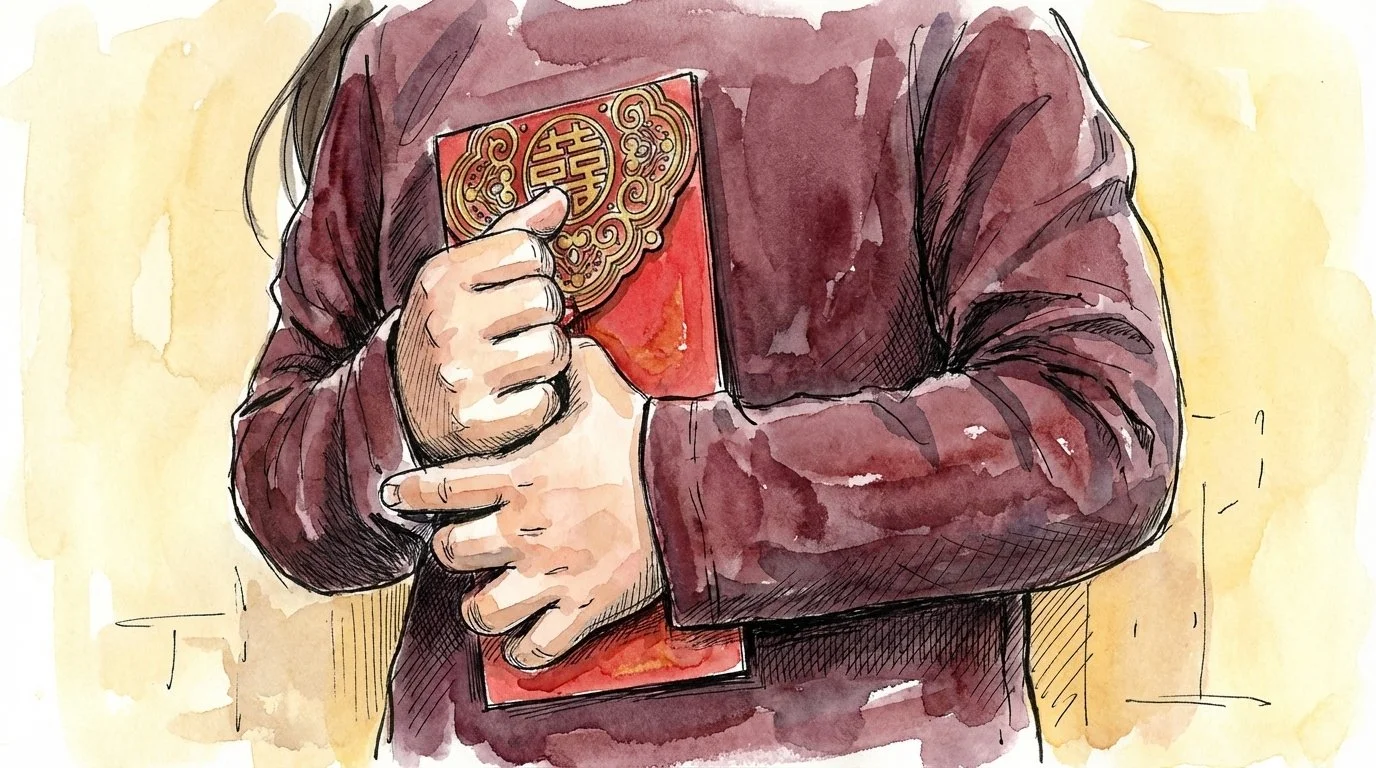
When I was a child, Chinese New Year meant one thing above everything else — hongbao.
Not just the money inside. The envelope itself.
I remember collecting them, comparing them, holding onto the ones with designs so beautiful or so interesting that throwing them away felt wrong. Some were red and gold with dragons. Some were delicate, almost minimal. Some felt premium in a way I couldn't explain as a child, I simply knew they deserved to be kept.
That instinct has never left me. And as I spent years building a practice around brand storytelling, I found myself returning to that childhood memory again and again. Why do some hongbao stay on the shelf long after the season ends, while others disappear the moment they are opened? Why does a small piece of paper designed with genuine intention outlast the gift it accompanied?
The answer, I have come to believe, is story. And it is the same answer that separates forgettable Chinese New Year card design from the kind that luxury brands should be creating.
The Cultural Weight Luxury Brands Often Underestimate
Chinese New Year is the one of the most emotionally loaded gifting seasons in Asia. It carries the weight of family, prosperity, renewal, and identity passed down through generations. For luxury brands, this is not simply a marketing opportunity. It is a cultural responsibility.
And yet, so many brands approach it the same way, year after year.
They reach for the obvious. Red. Gold. Dragons. The zodiac animal rendered in the brand's signature typeface. The result looks festive, looks on-theme but it doesn't feel like anything. It feels like a brand performing CNY, not a brand that genuinely understands what CNY means.
There is a profound difference between those two things. And that difference is storytelling.
Aaron Walter, in Designing for Emotion, describes a hierarchy of human needs in design: functional, reliable, usable and at the summit, pleasurable. Most brands stop at usable. They produce something correct. Something appropriate. Something that will not offend anyone and will not move anyone either.
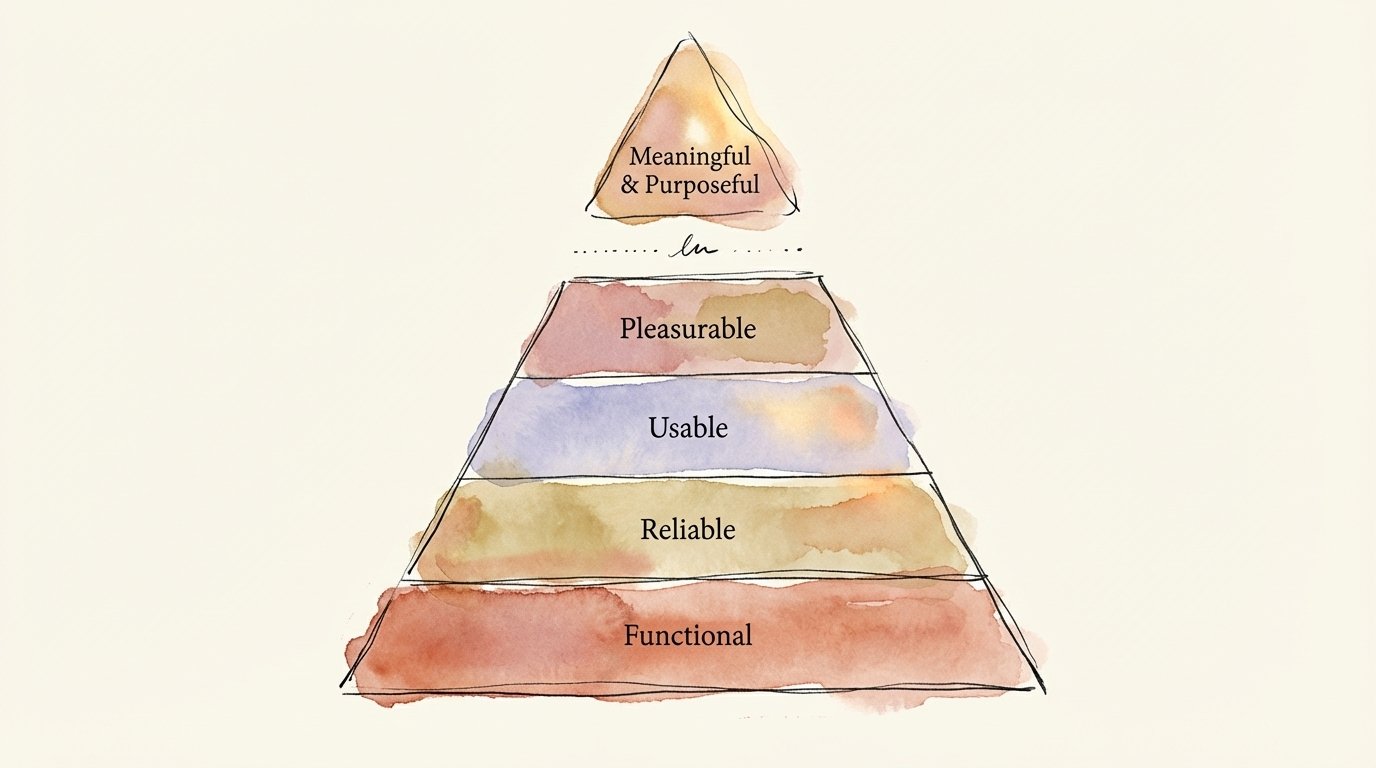
At AM, we go further. Pleasure alone creates a moment. Meaning and purpose create a memory that endures. When we approach Chinese New Year card design for luxury brands, we carry two questions into every brief: What does this card mean to the person holding it? And what does it reveal about who the brand truly is?
That is where the real work begins.
What We Learned Working on CNY Card Design for
Lexus Indonesia
We have worked with Lexus Indonesia since 2019. And in all those years, the brief has never once been ordinary. They do not come to us asking for something beautiful. They come asking for something extraordinary. That shared refusal to settle is, perhaps, why the work keeps getting better.
The question we always begin with is not what should this look like. It is what world does a Lexus owner inhabit and what does Chinese New Year mean within that world?
That question changed everything. For 2024 Chinese New Year, we built a narrative universe called "The House of Dragons"
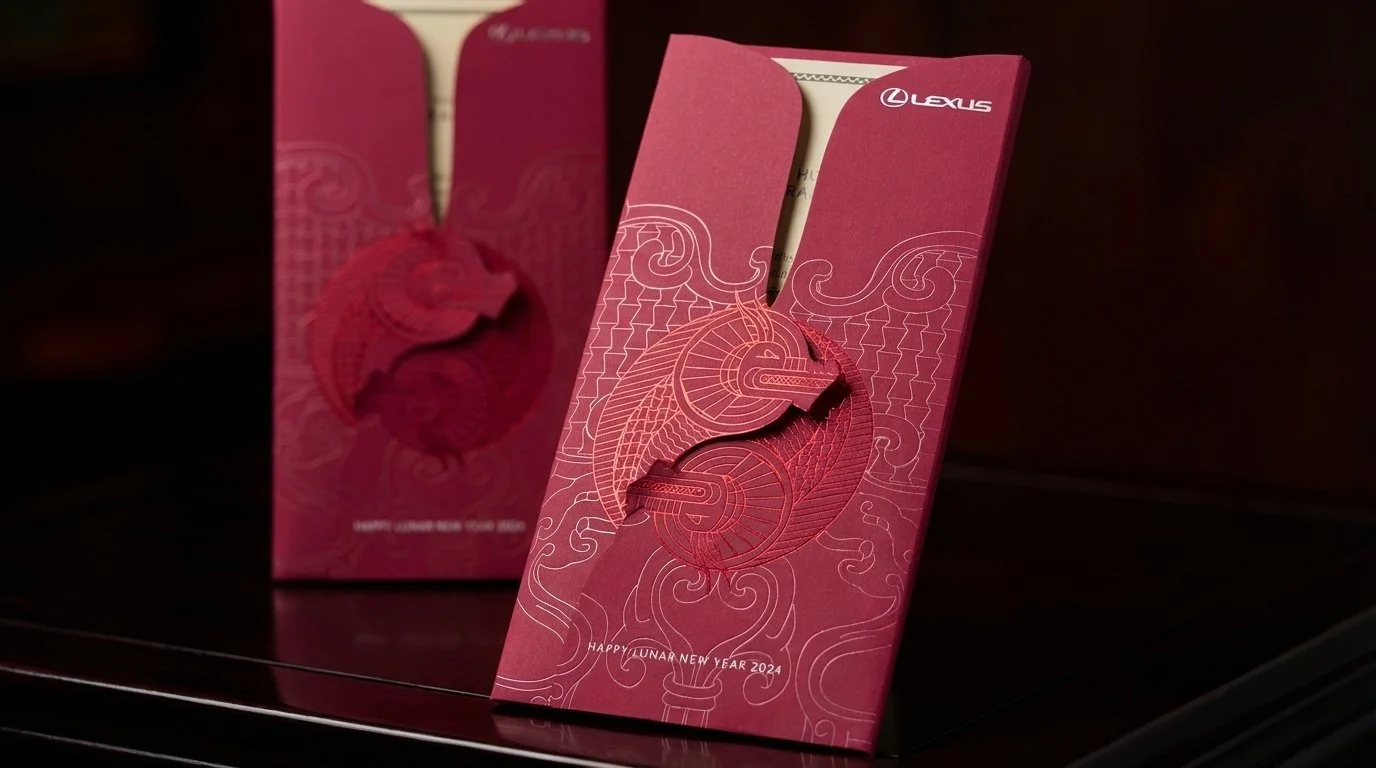
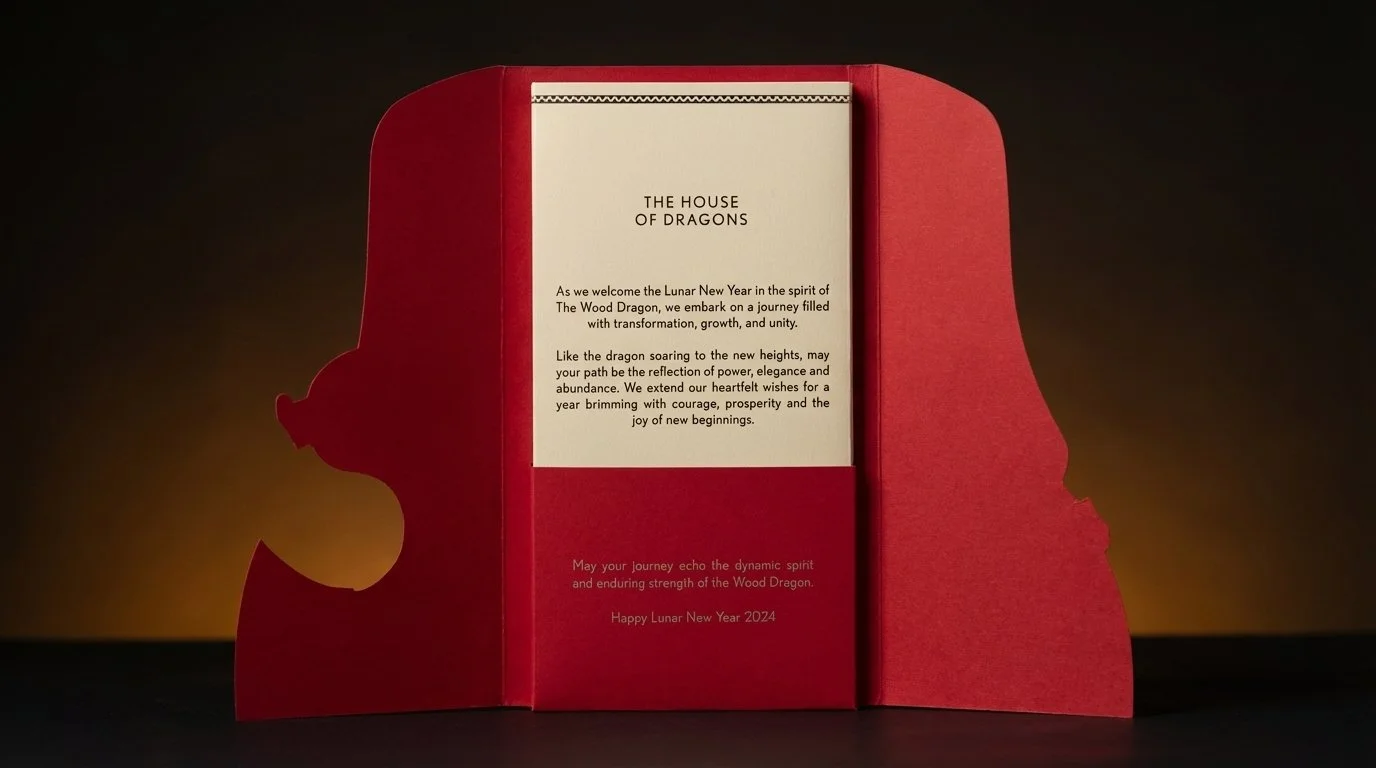
The three dragons, each one a portrait of a Lexus and the soul of its driver. The commanding LX and the King Dragon. The pioneering RZ and the Wu Lou Dragon. The refined LS and the Pi Yao Dragon.
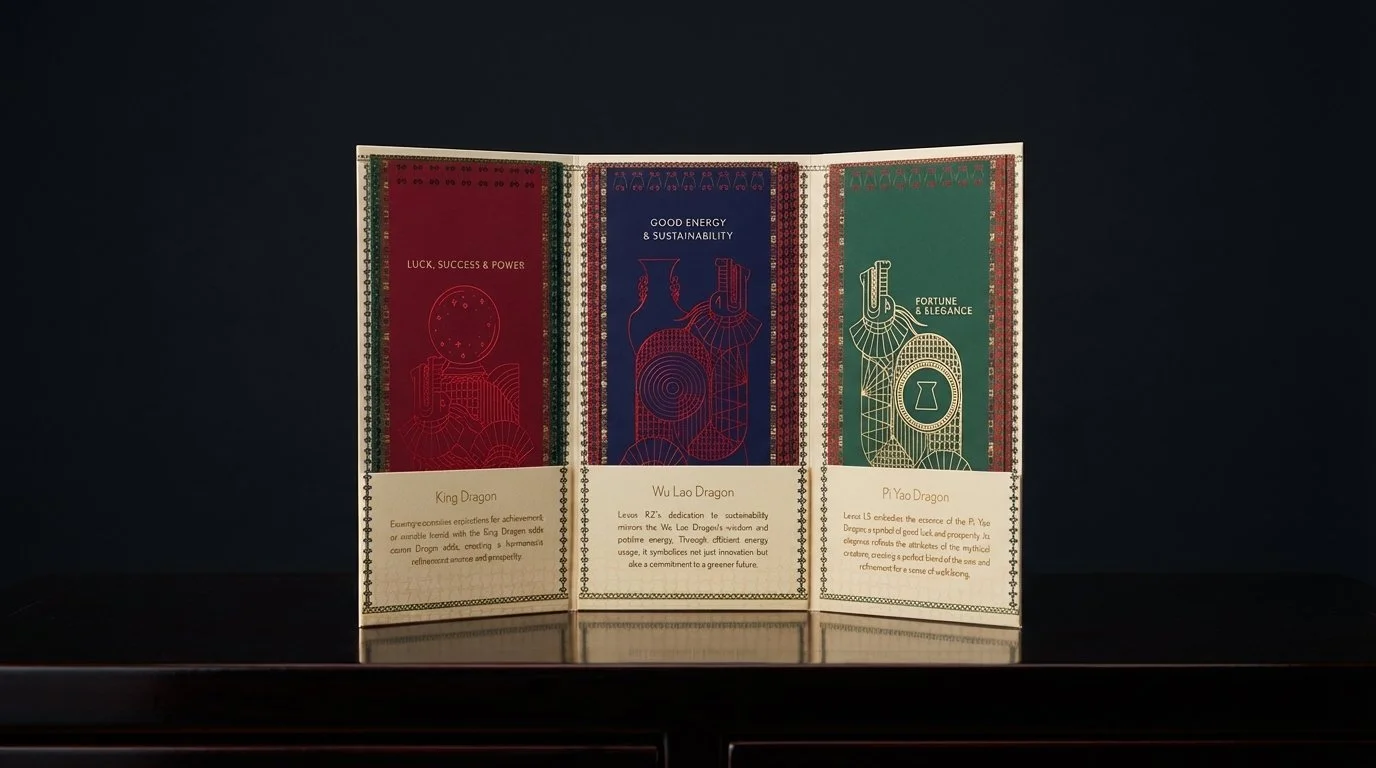
The visual execution followed the same conviction. Deep crimson, navy, and forest green, not only the expected red. Because a brand as certain of itself as Lexus does not need to borrow its identity from the season.
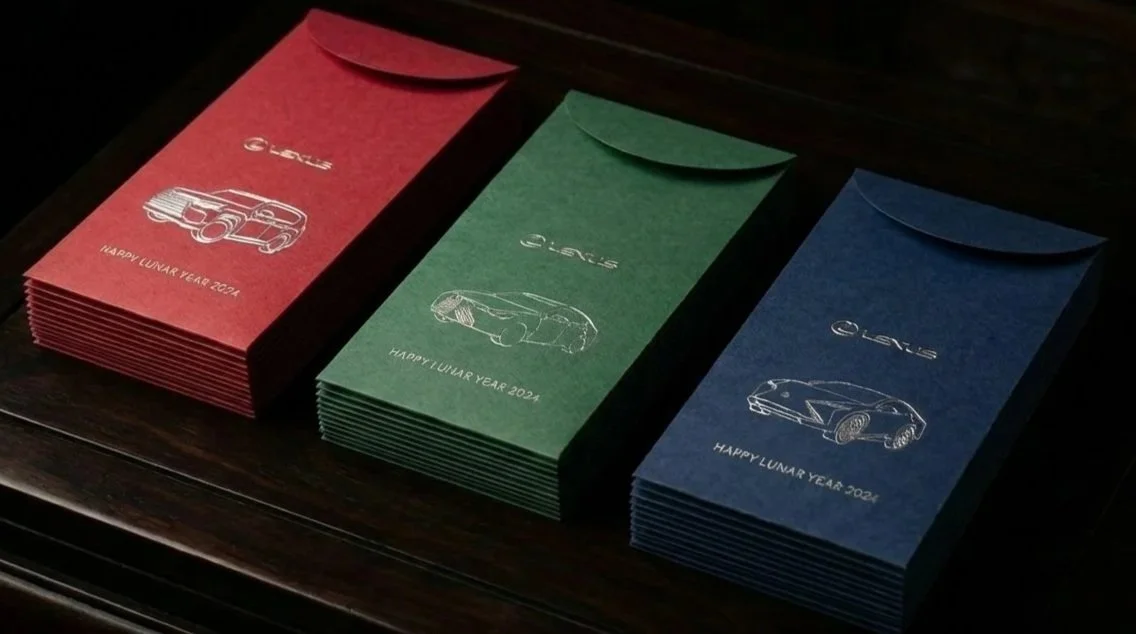
House of Dragons remains one of our favourite pieces of work to this day.
What This Means for Your Brand
Chinese New Year card design for luxury brands is not a seasonal checkbox. It is one of the most concentrated storytelling opportunities of the entire year.
The brands that get this right design for meaning before beauty, knowing that a stunning card without genuine emotional intent is simply expensive decoration. Every detail carries weight. The motif. The paper. The words. In luxury, nothing is neutral.
If you want yours to be the hongbao nobody throws away - hello@weare-am.com